Intervals Music Theory Chart. Click here for a printable pdf. These music chords are formed by adding a fourth note to a triad (3 note chord), at an interval of a 3rd above the 5th of the chord. Specific intervals (music theory lesson) specific intervals are measured both on the staff and in half steps on the keyboard. This creates the interval of a seventh above the root of the chord. If you're looking for help with descending intervals, check out our newer article, memorize descending intervals with this handy guide.] being able to recognize intervals in music is one of those classic hallmarks of being a pro.
The numerical value indicates the number of tones of the diatonic scale it includes. Specifically, however, c to d is one half step larger than c to db. An interval may be described as horizontal, linear, or melodic if it refers to successively sounding tones, such as two adjacent pitches in a melody, and vertical or harmonic if it pertains to simultaneously sounding tones, such as in a chord. Major and minor intervals are the intervals created by the key signatures in major or minor keys without any added augmentation or diminished tones.; In this video we will look at an easier w.
Music Theory Basics What Are Notes Intervals Scales And Chords Musicradar from cdn.mos.cms.futurecdn.net As you learned in the previous lesson, c to d and c to db are both generic seconds. An interval is the distance between two notes. Intervals are classified as major, minor, augmented, diminished, and perfect. If you're looking for help with descending intervals, check out our newer article, memorize descending intervals with this handy guide.] being able to recognize intervals in music is one of those classic hallmarks of being a pro. Theory websites musictheory.net emusictheory.com practicespot sightreadthis.com. Thanks to laura krzyston for compiling this list! Use the charts below to make a personal list of reference songs that you know well. In this video we will look at an easier w.
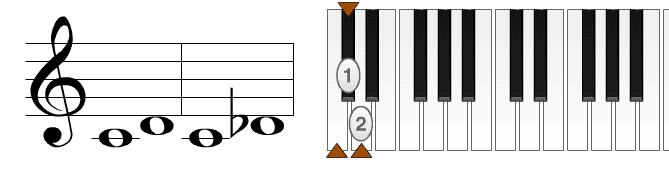
If we flatten a major interval by a tone (whole step) it becomes a diminished interval;
How to use the earmaster interval song chart. Music intervals and teaching music theory. Perfect intervals refer to unison, 4ths, 5ths, and octaves. When a scale or mode has a major interval between these notes, it is called major. Music theory is often concerned with describing how musicians and composers make music, including tuning systems and methods of composition among other topics. In music, an interval is a measured distance between. These intervals make up chords, and melodies, and are the building blocks of all music, so i believe strongly in knowing these really well. For example, a descending minor third is equal to the beginning of the song hey jude. Notes in music theory are sounds with determined frequencies.in english speaking countries, sounds in the c major scale (the white keys on a piano) are named. An interval in music defines the difference between two pitches. In the staff above, the diatonic tones are shown (i.e. The number represents how far forward the second note is from the first in the alphabet. Our materials that cover the early stages of music theory are designed to allow your students to progress logically through the nuts and bolts of the subject without getting too hung up on notation.
In the staff above, the diatonic tones are shown (i.e. Intervals can either be harmonic (played at the same time) or melodic (played successively). An interval is the distance between two notes. In this chapter, we will examine the different types of intervals. Use this guide to help you determine your intervals with some popular tunes.
Specific Intervals Music Theory Lesson from www.8notes.com Intervals can either be harmonic (played at the same time) or melodic (played successively). An interval in music defines the difference between two pitches. For additional practice, try this: These numbers are the distanc. For example, you can say b natural is a half step below c natural, or e flat is a step and a half above c natural. The smallest interval in western music is a half step. Use this guide to help you determine your intervals with some popular tunes. Notes in music theory are sounds with determined frequencies.in english speaking countries, sounds in the c major scale (the white keys on a piano) are named.
If you're looking for help with descending intervals, check out our newer article, memorize descending intervals with this handy guide.] being able to recognize intervals in music is one of those classic hallmarks of being a pro.
Theory websites musictheory.net emusictheory.com practicespot sightreadthis.com. But when we talk about larger intervals in the major/minor system, there is a more convenient and descriptive way to name them. Specific intervals (music theory lesson) specific intervals are measured both on the staff and in half steps on the keyboard. Perfect intervals refer to unison, 4ths, 5ths, and octaves. When this interval is a minor, it is called minor. Click here for a printable pdf. An interval is the distance from one note to another. Intervals can be described using half steps and whole steps. The half step (semitone) is the smallest interval in tonal music. The smallest interval in western music is a half step. In music, an interval is a measured distance between. In music, an interval is the measure of distance between two notes. These numbers are the distanc.
Specific intervals (music theory lesson) specific intervals are measured both on the staff and in half steps on the keyboard. An interval is the distance from one note to another. Music intervals and teaching music theory. Music theory is often concerned with describing how musicians and composers make music, including tuning systems and methods of composition among other topics. Our materials that cover the early stages of music theory are designed to allow your students to progress logically through the nuts and bolts of the subject without getting too hung up on notation.
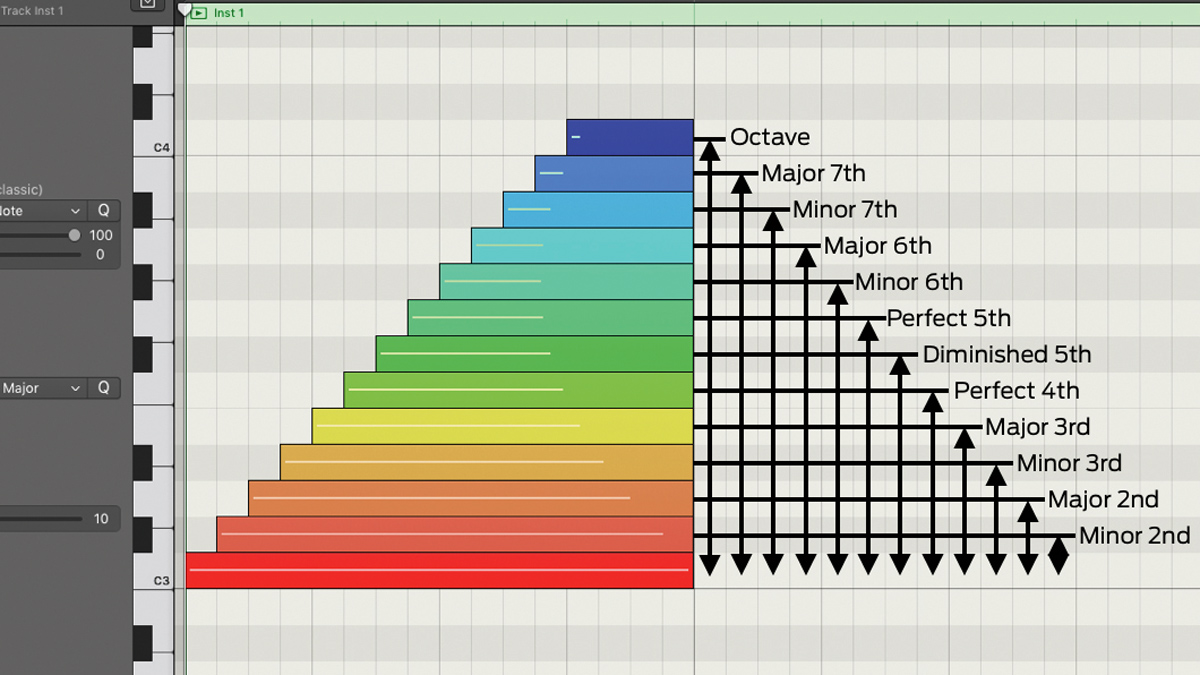
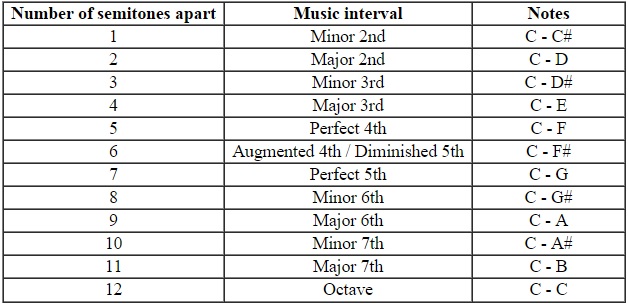
Music Intervals And Basic Theory For Guitarists from www.guitarplayerworld.com Perfect intervals refer to unison, 4ths, 5ths, and octaves. Music intervals and teaching music theory. Specific intervals (music theory lesson) specific intervals are measured both on the staff and in half steps on the keyboard. The chart shows the names of intervals and the steps between them. An interval is the distance between two notes. In this video we will look at an easier w. An interval is the distance from one note to another. Major and minor intervals are the intervals created by the key signatures in major or minor keys without any added augmentation or diminished tones.;
Let's learn a few specific intervals.
In music theory, an interval is the measure of the distance between two pitches. In this chapter, we will examine the different types of intervals. The numerical value indicates the number of tones of the diatonic scale it includes. We continue our music theory adventure by looking at the different kinds of intervals in both the major and minor scales, as well as augmented and diminished. But when we talk about larger intervals in the major/minor system, there is a more convenient and descriptive way to name them. The exercise could not be displayed because javascript is disabled. Theory websites musictheory.net emusictheory.com practicespot sightreadthis.com. Select one song for each ascending and descending interval. An interval is the distance between two notes. When a scale or mode has a major interval between these notes, it is called major. Thanks to laura krzyston for compiling this list! When this interval is a minor, it is called minor. If you're a singer, it means you can walk into an audition or.